Sciatica Pain Relief: What Actually Works? A Doctor's Guide
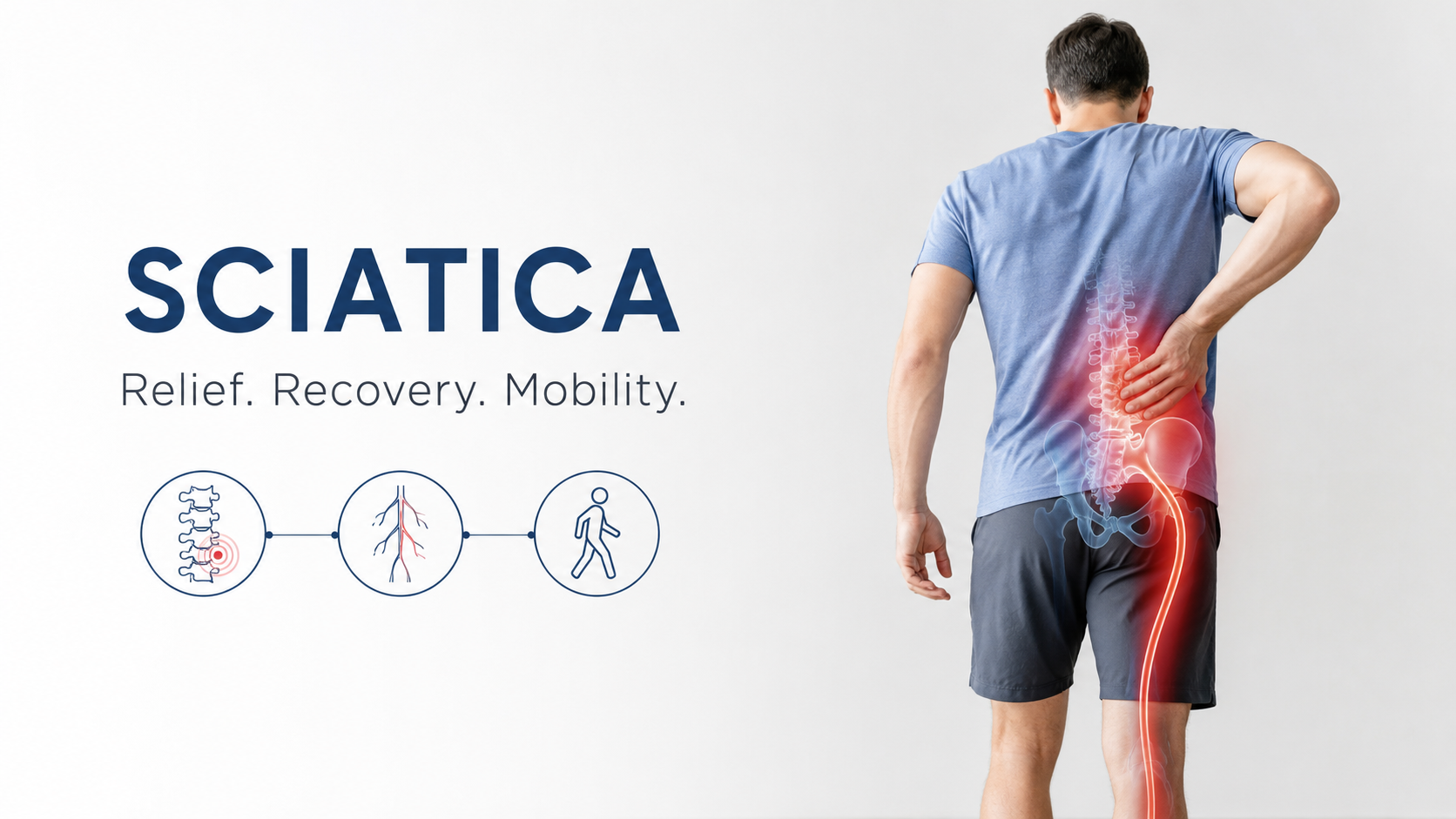
If you've been experiencing pain that starts in your lower back and travels down your buttock into your leg, you may be dealing with sciatica. This condition affects millions of people and can make everyday activities like sitting, walking, driving, or even sleeping uncomfortable.
The good news? Most cases of sciatica can be managed effectively with the right diagnosis and treatment, and surgery is not required for the majority of patients.
What Is Sciatica?
Sciatica is not a disease itself—it is a symptom caused by irritation or compression of the sciatic nerve, the largest nerve in the body. This nerve runs from the lower back through the hips, buttocks, and down each leg.
When the nerve is compressed, it can lead to pain, numbness, tingling, or weakness along its path.
Common Symptoms of Sciatica
You may have sciatica if you experience:
- Pain that radiates from the lower back to one leg
- Sharp, burning, or electric shock-like pain
- Tingling or numbness in the leg or foot
- Weakness while walking or climbing stairs
- Pain that worsens after prolonged sitting
- Discomfort while coughing or sneezing
Symptoms can range from mild irritation to severe pain that affects daily life.
What Causes Sciatica?
Several conditions can put pressure on the sciatic nerve, including:
- Herniated (slipped) disc
- Degenerative disc disease
- Spinal stenosis
- Piriformis syndrome
- Bone spurs
- Injury or trauma
- Poor posture and prolonged sitting
Identifying the underlying cause is the key to choosing the right treatment.
Effective Ways to Relieve Sciatica Pain
- Get the Correct Diagnosis
Sciatica is often mistaken for general back pain. A thorough medical evaluation helps determine the exact cause and ensures appropriate treatment.
- Stay Active
While complete bed rest may seem helpful, gentle movement is usually more beneficial. Short walks and light stretching can help reduce stiffness and support recovery.
- Physiotherapy
A personalized physiotherapy program can improve flexibility, strengthen supporting muscles, and reduce pressure on the sciatic nerve.
- Pain Management Procedures
For patients whose pain persists despite medications and physiotherapy, minimally invasive pain management procedures such as image-guided injections may provide significant relief by reducing inflammation around the affected nerve.
- Lifestyle Changes
Simple habits can make a big difference:
- Maintain good posture
- Avoid sitting continuously for long periods
- Use proper lifting techniques
- Maintain a healthy weight
- Strengthen your core muscles
When Should You See a Doctor?
Don't ignore persistent symptoms. Seek medical evaluation if:
- Pain lasts longer than two weeks
- Pain is severe or progressively worsening
- You develop numbness or weakness in the leg
- Walking becomes difficult
- Home remedies are not helping
- Pain keeps returning
Early diagnosis often leads to faster recovery and helps prevent long-term nerve damage.
Is Surgery Always Necessary?
No. Many people worry that sciatica automatically means spine surgery.
In reality, most patients improve with conservative treatment, physiotherapy, medications, and advanced pain management techniques. Surgery is generally considered only when there is severe nerve compression, progressive weakness, or when non-surgical treatments fail to provide relief.
Frequently Asked Questions
Can sciatica heal on its own?
Yes, mild cases often improve within a few weeks with proper care. However, persistent or severe symptoms should be evaluated by a specialist.
Is walking good for sciatica?
In most cases, gentle walking can help reduce stiffness and promote recovery. Avoid activities that significantly worsen your pain.
Can sitting make sciatica worse?
Yes. Prolonged sitting increases pressure on the lower spine and may aggravate sciatic nerve irritation. Taking regular breaks to stand and stretch is recommended.
Can sciatica come back?
Yes. Without addressing the underlying cause or making lifestyle changes, symptoms can recur.
Take the First Step Towards Pain Relief
Living with sciatica doesn't have to become your normal. The earlier the cause is identified, the better the chances of relieving pain without surgery.
If you're experiencing persistent pain that travels from your lower back into your leg, consult a qualified pain specialist for a comprehensive evaluation and a personalized treatment plan. Early intervention can help you return to your daily activities with greater comfort and confidence.
About Dr. Archana Deshpande
Dr. Archana Deshpande is an accomplished Interventional Pain and Spine Specialist with MBBS, MD (Anesthesia), and Fellowship in Interventional Pain Management (FIPM). She specializes in advanced, non-surgical relief for chronic back pain, sciatica, knee pain, and fibromyalgia at Harmony Pain Clinic in Ramdaspeth, Nagpur.
Need Relief from Chronic Pain or Fibromyalgia?
Schedule an expert consultation with Dr. Archana Deshpande at Harmony Pain Clinic in Nagpur.
Book an Appointment